We flew from Taipei, Taiwan to Bali, Indonesia and went directly to the Nirarta Centre for Living Awareness to do our own 10-day meditation retreat. Nirarta is perched on a hillside surrounded by tranquil rice terraces.


We had our own secluded cabin named Gangga, which was down the hill from the rest of Nirarta. Gangga was built in January 2012. We know this because the spirit house in front had the date engraved on it.

We set up our meditation area on the deck facing the Unda River and spent most of our waking hours here. The sound of the water flowing was loud, and we also could hear birds and insects’ songs.

We used the deck for practicing yoga each day. The traditional meditation posture is full lotus, but we find it much too difficult to hold for more than a minute. So we practiced lotus briefly and other postures helpful for seated meditation during our yoga sessions, and sat in in a comfortable cross-legged position when we meditated.

We appreciated how Gangga blurred the boundaries between inside and outside through the open architectural style and many windows. In the daytime the bathroom was quite pleasant with soft breezes and nice views. But the bathroom was also open along the top back wall, which enabled bats to sleep hanging from the ceiling at night. We found this a bit unnerving!

At first we shared our bedroom with several cute geckoes like this one, until they decided we were bad roommates. They didn’t like having the bathroom door closed, since this was how they got in and out. But we didn’t like having bats in the bedroom. We still heard the geckoes even when they weren’t in the bedroom. They make sounds like a loud squeaky dog toy saying “gecko”, which always made us smile.

This photo was taken early one morning while Pete was practicing walking meditation.

It’s really helpful to practice in a beautiful natural environment.

The vibrant colors and aliveness of the flowers and plants reminded us to pay attention to the present moment.


The land in Bali is filled with fecund energy and plants grow everywhere. This coconut tree trunk has many different types of vines growing up it.

What a well-camouflaged caterpillar!

This is a common sun skink. Everyday we saw a handful of these lizards crawling around the yard. They eat ants, so they were never short of food. There were tons of ants, three different sizes and kinds, so we got used to brushing ants off us as we meditated.

At night there were fireflies that zoomed all around! This plant and others with white variegated leaves glowed in the moonlight.

These passion fruit vines are growing up a trellis. We ate several of the delicious fruits while on retreat.


Our meals were brought to Gangga to further insulate us while we meditated intensively. Here’s a typical breakfast of an omelet, toast, oatmeal, watermelon and papaya. There are also two ripe passion fruit towards the top of the frame. We learned that time is elastic in Bali, so we were flexible with our schedule and would eat when the food arrived so that the ants didn’t get a head start.

Lunch was usually 2 vegetarian dishes like this tempeh in tomato oil sauce and stir fried vegetables served with rice or noodles. Nirarta has a kitchen garden where they grow lettuce, tomatoes and cucumbers, so we enjoyed salads every day.

On day seven of the retreat we noticed offerings of flower petals, rice and incense in banana leaves all around Gangga. After the retreat we learned these leaf tray offerings are called canang sari, or sesajen and are made to honor the ancestral spirits who live on the land.


It rained a little bit every day, which cooled down the temperature and kept the air moist and pleasant for our skin. The snails loved the moisture too.

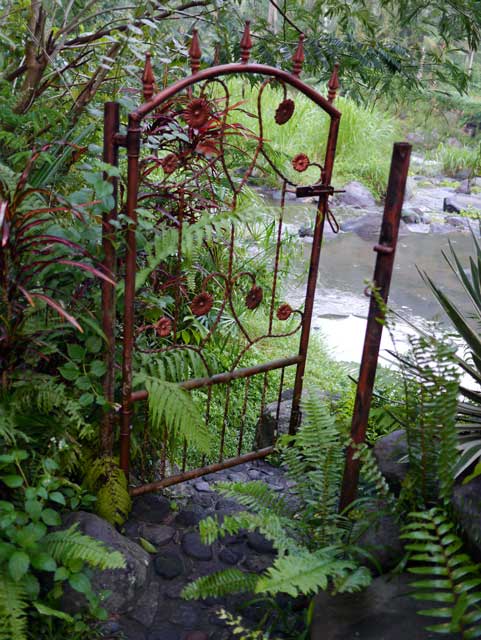
Stone paths linked the grounds down to the river. A leech attached itself to Kristina’s leg while she was taking photos down by the river – yuck!
On the ninth day of our retreat the rain poured down in buckets all day and night. The Unda River became a raging torrent of water, tripling in size.

Here are pictures of the river before and after the deluge. We heard what sounded like thunder as trees, plants, and rocks were dragged downstream by the force of the water. It continued for hours at a deafening volume that blocked out all insect and animal sounds.


The lawn in front of Gangga briefly became a small lake. (The white lines in the photo are raindrops.)

When we awoke on day ten of the retreat we were glad the rain had stopped. We had finished our retreat, so we spent one night at the Nirarta main compound. It was a nice way to ease back into civilization.


The rice fields had been harvested since we started our retreat. Here are pictures from before and after the harvest.


We have now been traveling for close to half a year and have visited seven countries. It was especially nice to be on retreat near the mid point of our journey, since as we reflected on the incredible last six months we also got to look forward to an equal amount of remaining travel time!
We had our own secluded cabin named Gangga, which was down the hill from the rest of Nirarta. Gangga was built in January 2012. We know this because the spirit house in front had the date engraved on it.
We set up our meditation area on the deck facing the Unda River and spent most of our waking hours here. The sound of the water flowing was loud, and we also could hear birds and insects’ songs.
We used the deck for practicing yoga each day. The traditional meditation posture is full lotus, but we find it much too difficult to hold for more than a minute. So we practiced lotus briefly and other postures helpful for seated meditation during our yoga sessions, and sat in in a comfortable cross-legged position when we meditated.
We appreciated how Gangga blurred the boundaries between inside and outside through the open architectural style and many windows. In the daytime the bathroom was quite pleasant with soft breezes and nice views. But the bathroom was also open along the top back wall, which enabled bats to sleep hanging from the ceiling at night. We found this a bit unnerving!
At first we shared our bedroom with several cute geckoes like this one, until they decided we were bad roommates. They didn’t like having the bathroom door closed, since this was how they got in and out. But we didn’t like having bats in the bedroom. We still heard the geckoes even when they weren’t in the bedroom. They make sounds like a loud squeaky dog toy saying “gecko”, which always made us smile.
This photo was taken early one morning while Pete was practicing walking meditation.
It’s really helpful to practice in a beautiful natural environment.
The vibrant colors and aliveness of the flowers and plants reminded us to pay attention to the present moment.
The land in Bali is filled with fecund energy and plants grow everywhere. This coconut tree trunk has many different types of vines growing up it.
What a well-camouflaged caterpillar!
This is a common sun skink. Everyday we saw a handful of these lizards crawling around the yard. They eat ants, so they were never short of food. There were tons of ants, three different sizes and kinds, so we got used to brushing ants off us as we meditated.
At night there were fireflies that zoomed all around! This plant and others with white variegated leaves glowed in the moonlight.
These passion fruit vines are growing up a trellis. We ate several of the delicious fruits while on retreat.
Our meals were brought to Gangga to further insulate us while we meditated intensively. Here’s a typical breakfast of an omelet, toast, oatmeal, watermelon and papaya. There are also two ripe passion fruit towards the top of the frame. We learned that time is elastic in Bali, so we were flexible with our schedule and would eat when the food arrived so that the ants didn’t get a head start.
Lunch was usually 2 vegetarian dishes like this tempeh in tomato oil sauce and stir fried vegetables served with rice or noodles. Nirarta has a kitchen garden where they grow lettuce, tomatoes and cucumbers, so we enjoyed salads every day.
On day seven of the retreat we noticed offerings of flower petals, rice and incense in banana leaves all around Gangga. After the retreat we learned these leaf tray offerings are called canang sari, or sesajen and are made to honor the ancestral spirits who live on the land.
It rained a little bit every day, which cooled down the temperature and kept the air moist and pleasant for our skin. The snails loved the moisture too.
Stone paths linked the grounds down to the river. A leech attached itself to Kristina’s leg while she was taking photos down by the river – yuck!
On the ninth day of our retreat the rain poured down in buckets all day and night. The Unda River became a raging torrent of water, tripling in size.
Here are pictures of the river before and after the deluge. We heard what sounded like thunder as trees, plants, and rocks were dragged downstream by the force of the water. It continued for hours at a deafening volume that blocked out all insect and animal sounds.
The lawn in front of Gangga briefly became a small lake. (The white lines in the photo are raindrops.)
When we awoke on day ten of the retreat we were glad the rain had stopped. We had finished our retreat, so we spent one night at the Nirarta main compound. It was a nice way to ease back into civilization.
The rice fields had been harvested since we started our retreat. Here are pictures from before and after the harvest.
We have now been traveling for close to half a year and have visited seven countries. It was especially nice to be on retreat near the mid point of our journey, since as we reflected on the incredible last six months we also got to look forward to an equal amount of remaining travel time!


