We were so excited to meet up with Kristina's cousin and our good friend Cynthia. We have been looking forward to traveling together for months!

The three of us traveled to Chiang Mai, Thailand for the Loi Krathong lantern festival that is held throughout Thailand during the last full moon of the lunar calendar. Coinciding at the same time in northern Thailand is also the Yi Peng festival, and together we experienced three beautiful evenings of lights.


On the first night we went to Mae Cho, which is about an hour outside of Chiang Mai. This area is known for having the most lanterns set aloft.


The lanterns are made of rice paper and have a candle attached to the bottom. The candle heats the air inside the lantern, causing it to lift upwards into the night sky.


This group of friends wrote their wishes on the lantern they set aloft.

It was very crowded and the atmosphere was festive.

Specialty lanterns like this Doremon were unusual. There were also a few angry birds sky lanterns.

The second night of the festival we saw krathongs, which are lotus shaped offerings that are lit with a candle (to venerate the Buddha) and floated down the river (to release us from our defilements like greed, hatred and delusion).


The Ping River was awash in light from all the candles. Our three krathongs quickly merged with the other floating crowns.

Cynthia is playing Harry Potter with a fun fireworks wand that she bought for $1.


There was a parade with floats and people dressed up.


We especially liked the costumes of this matching couple.


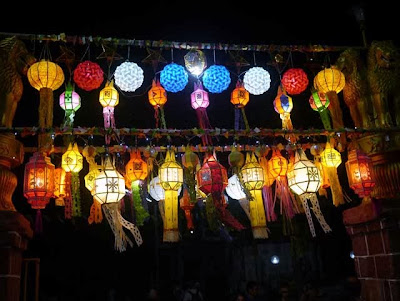
The whole city of Chiang Mai was decorated with lanterns for the festival.


This float featured a group of young Thai girls elaborately dressed up. They were the some of the stars of the parade and charmingly responded to the demands of the crowds photographing them.


On the third night we were a bit tired of crowds so we went north along the Ping River and enjoyed dinner while watching the krathongs float by.


Another fun activity was a river kayaking trip. Our first view of the river included a large krathong from the festival that had beached on a sandbar.

Cynthia and Pete paddled in sit on top kayaks, with Kristina in a low riding touring kayak.


The scenery was awesome!

We were glad it was only class 1 rapids, as we were sufficiently challenged by the currents. Kristina's bungee cord (used to hold a water bottle) got hooked on a branch, dumping her into the river! She was soaked but fine.


It was a really fun way to spend a day, floating and paddling on the river.

Another day we visited some native Hill tribes at a government-sponsored village called Baan Tong Luang. This women is from the Lahu Shi Bala tribe that originated in Tibet but now lives in Thailand and Burma.

The people in this village chose to live here. They earn a small stipend and sell crafts to the tourists. Kristina and Pete towered over this Yao woman. Originally from central China, the Yao have lived in Thailand for 150 years. We bought some beautiful embroidery from her.


We enjoyed talking with these long neck Karen women. They left Burma and now are enjoying a better life in Thailand.


This girl is Kayaw, which is a sub group of the Karen tribe. She showed us some lovely woven scarves which we also bought.

We had such a great time in Chiang Mai! Next we fly to Laos.

The three of us traveled to Chiang Mai, Thailand for the Loi Krathong lantern festival that is held throughout Thailand during the last full moon of the lunar calendar. Coinciding at the same time in northern Thailand is also the Yi Peng festival, and together we experienced three beautiful evenings of lights.


On the first night we went to Mae Cho, which is about an hour outside of Chiang Mai. This area is known for having the most lanterns set aloft.


The lanterns are made of rice paper and have a candle attached to the bottom. The candle heats the air inside the lantern, causing it to lift upwards into the night sky.


This group of friends wrote their wishes on the lantern they set aloft.

It was very crowded and the atmosphere was festive.

Specialty lanterns like this Doremon were unusual. There were also a few angry birds sky lanterns.

The second night of the festival we saw krathongs, which are lotus shaped offerings that are lit with a candle (to venerate the Buddha) and floated down the river (to release us from our defilements like greed, hatred and delusion).


The Ping River was awash in light from all the candles. Our three krathongs quickly merged with the other floating crowns.

Cynthia is playing Harry Potter with a fun fireworks wand that she bought for $1.


There was a parade with floats and people dressed up.


We especially liked the costumes of this matching couple.


The whole city of Chiang Mai was decorated with lanterns for the festival.


This float featured a group of young Thai girls elaborately dressed up. They were the some of the stars of the parade and charmingly responded to the demands of the crowds photographing them.


On the third night we were a bit tired of crowds so we went north along the Ping River and enjoyed dinner while watching the krathongs float by.


Another fun activity was a river kayaking trip. Our first view of the river included a large krathong from the festival that had beached on a sandbar.

Cynthia and Pete paddled in sit on top kayaks, with Kristina in a low riding touring kayak.


The scenery was awesome!

We were glad it was only class 1 rapids, as we were sufficiently challenged by the currents. Kristina's bungee cord (used to hold a water bottle) got hooked on a branch, dumping her into the river! She was soaked but fine.


It was a really fun way to spend a day, floating and paddling on the river.

Another day we visited some native Hill tribes at a government-sponsored village called Baan Tong Luang. This women is from the Lahu Shi Bala tribe that originated in Tibet but now lives in Thailand and Burma.

The people in this village chose to live here. They earn a small stipend and sell crafts to the tourists. Kristina and Pete towered over this Yao woman. Originally from central China, the Yao have lived in Thailand for 150 years. We bought some beautiful embroidery from her.


We enjoyed talking with these long neck Karen women. They left Burma and now are enjoying a better life in Thailand.


This girl is Kayaw, which is a sub group of the Karen tribe. She showed us some lovely woven scarves which we also bought.

We had such a great time in Chiang Mai! Next we fly to Laos.