We flew from Dunhuang to Xi’an. Xi’an was one of the capitals of China with history going back 3,100 years. Xi’an was the eastern end of the Silk Routes. Today it's a medium sized Chinese city with a population of 10 million. We had fun exploring the crowded streets in the old town.

We ate some of this spicy tofu, which was tasty.

We visited the Wild Goose Pagoda. It was built in 648 to hold the 600 scrolls that Xuan Zang brought back from India to China.

We climbed the seven levels to the top, 210 feet. The stairs got progressively smaller and steeper as we went up.


The views from the top were superb and made us realize how impressive this building must have been, as it was the tallest in the land for twelve centuries.


Last January we visited a wonderful Chinese temple for Xuan Zang when we were in Rajgir, India, where he had studied for two years at the great Buddhist University in Nalanda. Now in China we enjoyed learning more about this incredible scholar who spent 16 years traveling and studying Buddhism and Sanskrit in India. He then spent 40 years in Xi'an translating the scrolls he brought back into Chinese, profoundly enlarging the scope of Chinese Zen Buddhism.

Based on folk tales and the 16th century novel Journey to the West by Wu Cheng’en, we read Monkey, Journey to the West retold by David Kherdian. It’s the story of Xuan Zang and four magic animal characters who are Daoist Immortals that overcome huge obstacles while traveling to India to obtain the Buddhist texts. After years of traveling, the book ends with Xuan Zang bringing the scrolls back to the Chinese Emperor.

The Great Wild Goose Pagoda was built in an Indian architectural style to honor Xuan Zang’s journey and the Buddhist scriptures.

For the 2008 Olympics, a whole temple complex was added here. These roof ornaments are the Daoist Immortals in animal form. They are all watching the monk at the front who is riding a phoenix.


Pete enjoyed photographing the temple complex.

The big attraction in Xi’an is the terracotta army that guards Emperor Qin Shihuang's burial mound.

Completed around 210 B.C., it took about 40 years to create the life sized 7,000 soldiers and 600 horse sculptures.


The figures were painted after they were fired. When exposed to air, the paint oxidized. On these soldiers the paint has been restored.

The Emperor had been a tyrannical leader. After he died the people rebelled by smashing the terracotta army. Here you can see archeologists who are putting the pieces back together. It seems like it will take 100 years for them to complete the restoration.

This archer was found almost whole with only his hands broken.

The gift shop had full sized soldiers for sale. We were not tempted.

The terracotta army is called the Eighth Wonder of the World. It was rediscovered in 1974 by four farmers while digging a well. The two farmers who are still alive now spend their days autographing museum books.


After visiting the terracotta army, we went to a cultural show of music and dance. We thought of Sean Mattingly since his birthday was the next day, October 19th. Today we send belated birthday wishes to our dear friend Sean who always enjoys fabulous costumes!


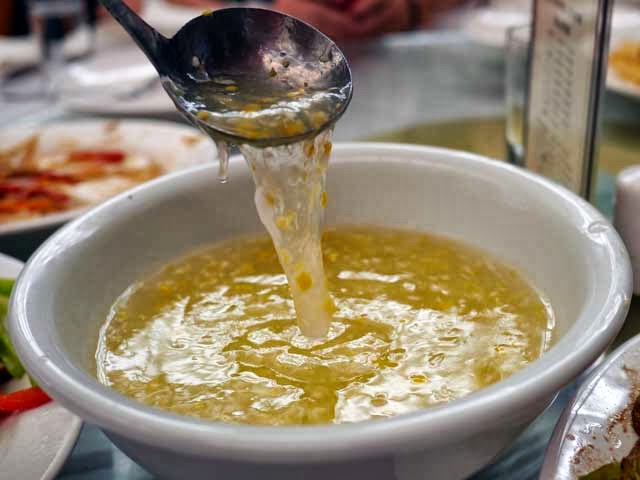
Because we are with a tour group, we tend to be eating buffet or family style meals. So far the food in China has had varying levels of quality. This viscous corn soup tasted mostly of cornstarch.

Here are Kristina and Andy at Andy's favorite vegetarian restaurant. The restaurant's name is translated as Empty Mind. Bodhidharma, first ancestor of Zen, is part of the restaurant's brand. We will write more about Bodhidharma in our next posts.

These dishes of wheat gluten with soy bean sprouts and greens, and pickled cabbage salad were delicious.


In addition to Buddhist temples, we also visited Confucian and Daoist temples in Xi'an. The first photo shows ancestor money compared to real Chinese currency. As part of the Daoist tradition, it is burned regularly so that the dead have money in the afterlife. The second photo is where the ancestral money is burned.


One percent (1%) of Xi’an is Muslim. Like this mother and daughter, they are descendants of Muslims that traveled the Silk Road 1,000 years ago and settled in Xi’an. The photo was taken in the garden of the Grand Mosque of Xi’an, which was founded in 742.

Next the tour group traveled by bus to Luoyang to visit the Longmen Caves that have amazing Buddhist statues.

Carved into limestone cliffs, the many irregular shaped cave openings resemble Swiss cheese.


The Longmen Caves were initially funded by Emperor Xianwen of the Northern Wei dynasty in 493 when he moved his capital to Luoyang. This Emperor also sponsored some of the Dunhuang temple caves.

The peak creation of caves and statues was in the 7th and 8th centuries, which was during the Tang dynasty when Buddhism was also very strong. Shown here is Ananda, the Buddha’s attendant.

Supposedly there are as many as 100,000 Buddha statues here in the 1,400 caves. Considering that some of the statues are as small as an inch, and that this doorway leads to the 10,000 Buddhas cave, it seems possible.

This charming statue of a monk was about 8 inches tall.

The Longmen Grottoes are a UNESCO World Heritage Site. We were happy to be allowed to photograph the beautiful sculptures.

In addition to human forms, there are also building sculptures like this pagoda.

In this photo are Enkyo Roshi, Zen priest and spiritual leader of our trip; Angus, a new friend and fellow practitioner; and Andy Ferguson, Zen scholar and our tour leader. In the background is the Yi River.

This Vairocana Buddha statue is 57 feet tall, the largest statue at Longmen. Commissioned by Empress Wu Zetian, this grotto is considered to be the ultimate in architectural expression of the Tang dynasty.

We found his face to be very pleasing. It is conjectured that the Buddha was carved to resemble the Empress and it has been referred to as the Chinese Mona Lisa.

In the impressive grotto the Vairocana Buddha is protected by this fierce guardian.

We thought of advent calendars, with all the small carved niches.


How lucky we feel to be able to see such incredible and inspiring Buddhist sculptures!


We ate some of this spicy tofu, which was tasty.

We visited the Wild Goose Pagoda. It was built in 648 to hold the 600 scrolls that Xuan Zang brought back from India to China.

We climbed the seven levels to the top, 210 feet. The stairs got progressively smaller and steeper as we went up.


The views from the top were superb and made us realize how impressive this building must have been, as it was the tallest in the land for twelve centuries.


Last January we visited a wonderful Chinese temple for Xuan Zang when we were in Rajgir, India, where he had studied for two years at the great Buddhist University in Nalanda. Now in China we enjoyed learning more about this incredible scholar who spent 16 years traveling and studying Buddhism and Sanskrit in India. He then spent 40 years in Xi'an translating the scrolls he brought back into Chinese, profoundly enlarging the scope of Chinese Zen Buddhism.

Based on folk tales and the 16th century novel Journey to the West by Wu Cheng’en, we read Monkey, Journey to the West retold by David Kherdian. It’s the story of Xuan Zang and four magic animal characters who are Daoist Immortals that overcome huge obstacles while traveling to India to obtain the Buddhist texts. After years of traveling, the book ends with Xuan Zang bringing the scrolls back to the Chinese Emperor.
"It wasn't long before a Grand Ceremony was held in the Wild Goose Pagoda and the true scriptures were read for the first time, with the result that a multitude of lost souls were saved from darkness and the true teaching was promulgated throughout the empire."

The Great Wild Goose Pagoda was built in an Indian architectural style to honor Xuan Zang’s journey and the Buddhist scriptures.

For the 2008 Olympics, a whole temple complex was added here. These roof ornaments are the Daoist Immortals in animal form. They are all watching the monk at the front who is riding a phoenix.


Pete enjoyed photographing the temple complex.

The big attraction in Xi’an is the terracotta army that guards Emperor Qin Shihuang's burial mound.

Completed around 210 B.C., it took about 40 years to create the life sized 7,000 soldiers and 600 horse sculptures.


The figures were painted after they were fired. When exposed to air, the paint oxidized. On these soldiers the paint has been restored.

The Emperor had been a tyrannical leader. After he died the people rebelled by smashing the terracotta army. Here you can see archeologists who are putting the pieces back together. It seems like it will take 100 years for them to complete the restoration.

This archer was found almost whole with only his hands broken.

The gift shop had full sized soldiers for sale. We were not tempted.

The terracotta army is called the Eighth Wonder of the World. It was rediscovered in 1974 by four farmers while digging a well. The two farmers who are still alive now spend their days autographing museum books.


After visiting the terracotta army, we went to a cultural show of music and dance. We thought of Sean Mattingly since his birthday was the next day, October 19th. Today we send belated birthday wishes to our dear friend Sean who always enjoys fabulous costumes!


Because we are with a tour group, we tend to be eating buffet or family style meals. So far the food in China has had varying levels of quality. This viscous corn soup tasted mostly of cornstarch.
Here are Kristina and Andy at Andy's favorite vegetarian restaurant. The restaurant's name is translated as Empty Mind. Bodhidharma, first ancestor of Zen, is part of the restaurant's brand. We will write more about Bodhidharma in our next posts.

These dishes of wheat gluten with soy bean sprouts and greens, and pickled cabbage salad were delicious.


In addition to Buddhist temples, we also visited Confucian and Daoist temples in Xi'an. The first photo shows ancestor money compared to real Chinese currency. As part of the Daoist tradition, it is burned regularly so that the dead have money in the afterlife. The second photo is where the ancestral money is burned.


One percent (1%) of Xi’an is Muslim. Like this mother and daughter, they are descendants of Muslims that traveled the Silk Road 1,000 years ago and settled in Xi’an. The photo was taken in the garden of the Grand Mosque of Xi’an, which was founded in 742.

Next the tour group traveled by bus to Luoyang to visit the Longmen Caves that have amazing Buddhist statues.

Carved into limestone cliffs, the many irregular shaped cave openings resemble Swiss cheese.


The Longmen Caves were initially funded by Emperor Xianwen of the Northern Wei dynasty in 493 when he moved his capital to Luoyang. This Emperor also sponsored some of the Dunhuang temple caves.

The peak creation of caves and statues was in the 7th and 8th centuries, which was during the Tang dynasty when Buddhism was also very strong. Shown here is Ananda, the Buddha’s attendant.

Supposedly there are as many as 100,000 Buddha statues here in the 1,400 caves. Considering that some of the statues are as small as an inch, and that this doorway leads to the 10,000 Buddhas cave, it seems possible.

This charming statue of a monk was about 8 inches tall.

The Longmen Grottoes are a UNESCO World Heritage Site. We were happy to be allowed to photograph the beautiful sculptures.

In addition to human forms, there are also building sculptures like this pagoda.

In this photo are Enkyo Roshi, Zen priest and spiritual leader of our trip; Angus, a new friend and fellow practitioner; and Andy Ferguson, Zen scholar and our tour leader. In the background is the Yi River.

This Vairocana Buddha statue is 57 feet tall, the largest statue at Longmen. Commissioned by Empress Wu Zetian, this grotto is considered to be the ultimate in architectural expression of the Tang dynasty.

We found his face to be very pleasing. It is conjectured that the Buddha was carved to resemble the Empress and it has been referred to as the Chinese Mona Lisa.

In the impressive grotto the Vairocana Buddha is protected by this fierce guardian.

We thought of advent calendars, with all the small carved niches.


How lucky we feel to be able to see such incredible and inspiring Buddhist sculptures!


